Policy In Action: NJEJA Supports Jersey City Residents in Fighting Cumulative Impacts
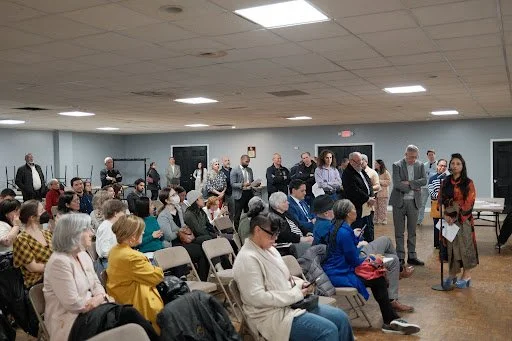
Jersey City Officials and community members at the Van Keuren Public Hearing, April 28, 2026.


On Tuesday evening, April 28, the Tishman Center stood with Jersey City, NJ residents demanding the full enforcement of the state’s Environmental Justice Law. Some 100 people were gathered in person and 100 online at a hearing hosted by Van Keuren LLC to comment on its proposal to construct a new large-scale solid waste transfer station and material recovery facility. The facility would funnel regional waste to Jersey City, bringing diesel traffic and pollution directly to a community already suffering from environmental burden


Those in attendance included residents, representatives of neighborhood associations, local representatives from city and county levels, and all three state lawmakers representing Jersey City,  as well as organizations like the New Jersey Environmental Justice Alliance, Earthjustice, Eastern Environmental Law Center, and Sustainable Jersey City. Numerous attendees, both in-person and via Zoom, spoke about the profound impacts of the proposed facility, sharing concerns about the associated noise, sight, smell, pollution, and truck traffic, and detailing what truly matters to this community and the surrounding area. Of the dozens of people who gave public comment that evening, not a single speaker expressed support for the project. 


If permitted, the facility would process 750 tons of waste per day and generate over 260 round-trip truck trips per day, adding diesel emissions, noise, and traffic to a community already recognized as overburdened. The associated impacts of diesel emissions would include PM2.5 and NOx pollution, which is a precursor to ozone and an existing stressor for the community. Diesel emissions are also associated with numerous negative health impacts, including asthma and cardiovascular risk, and can worsen existing conditions, including heart and lung disease. The U.S. EPA reports that “these conditions can result in increased numbers of emergency room visits, hospital admissions, absences from work and school, and premature death.” 


The facility argued that they would serve a compelling public interest by integrating themselves as part of the New Jersey Sports and Exposition Authority (NJSEA) Solid Waste Management Plan, as well as offering municipalities and entities in the surrounding counties (Bergen, Essex, and Hudson) an opportunity to divert their waste to the Van Keuren site. However, it should be noted that the “compelling public interest” provision of the EJ Law is specific to benefits felt by the OBC, which hosts the facility, and that there are already existing waste facilities in the surrounding area, which could take on excess waste Van Keuren claims they would support. 


As Sustainable Jersey City Founder and Chair, Debra Italiano said, 

“We do not need another waste transfer/materials recovery facility in Jersey City. That industrial zoned footprint of Van Keuren is a mega impediment to the planned Greenway Connectivity Corridors Vision. The Van Keuren Redevelopment Plan should be reversed, and the area should be rezoned with a new plan to integrate Jersey City green corridors connectivity plan and additionally provide for more affordable housing, which the city needs. Furthermore, there needs to be an intervention point which mandates that the NJSEA be more accountable to Jersey City and Hudson County, without superseding Zoning and Land Use Authority.” 
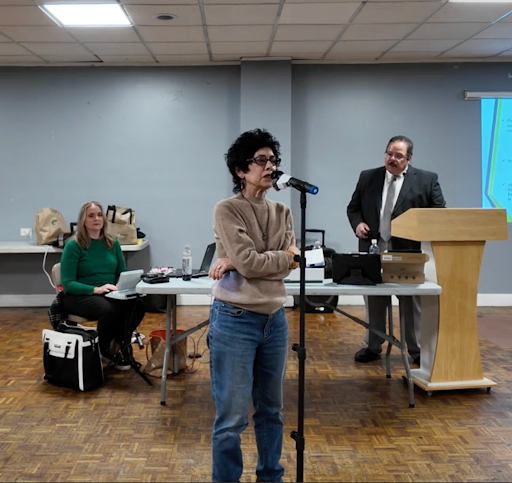
 

Debra Italiano, Founder and Chair of Sustainable Jersey City, speaking on her concerns with the Van Keuren proposal, impacts on Jersey City Greenways Development, and their connection to the NSJEA.


New Jersey Environmental Justice Alliance Director of Policy, Brooke Helmick, spoke on the audacity of the Van Keuren proposal and disputed the facility’s claim that they would fulfill an essential need in the area: 


“Over and over again, representatives of the Van Keuren facility have stressed the minimal impact of pollution in the community. Not only is it egregious to presume that a community should be forced to accept even “minimal” pollution in their community, but 260 truck trips and the associated diesel emissions have immense negative health impacts on residents when compounded with the existing diesel pollution that the community already must contend with. Furthermore, Van Keuren has not demonstrated – with any sort of sincerity – that they provide service or fill a compelling need for the local overburdened community in Jersey City. The community has been clear: this permit proposal must be denied.”   
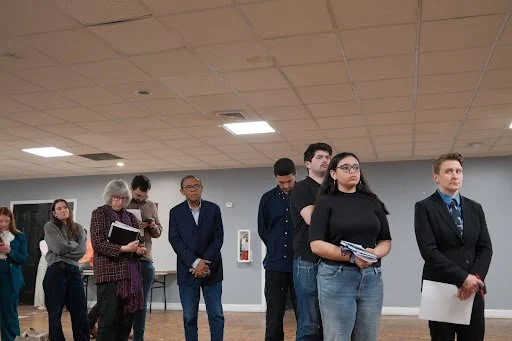
 

Partners from New Jersey Environmental Justice Alliance, Earthjustice, Eastern Environmental Law Center, and Sustainable Jersey City at the Van Keuren Public Hearing, April 28, 2026.


New Jersey’s Environmental Justice Law is one of the strongest environmental and public health policies in the country. The law addresses the problem of cumulative impacts–the combined burden of multiple pollution sources, environmental stressors, and social stressors over time–in low-income communities and communities of color. The problem is a legacy of historic and ongoing environmental racism, and a consequence of regulations that typically analyze sources of pollution or specific pollutants one by one. Passed in 2020, NJ’s landmark law requires the New Jersey Department of Environmental Protection (NJDEP) to consider what burdens communities are already facing, and, more importantly, requires NJDEP to deny permits for new sources of pollution in already overburdened communities. Put simply, the law–and similar state policies it has inspired– is meant to stop adding harm to communities already facing too much.


Van Keuren’s request was the first for a new permit under the EJ Law – resulting in the first test of the law’s permit denial power. 


As Patricia Cortado, Program and Communications Associate at the Tishman Center, and a resident of the Ironbound neighborhood in Newark, NJ, made clear in her comments to the crowd:


“On my block alone, we are already living with the consequences of environmental decisions made over decades… These are not data points. These are families I know and see every day.”


Neighborhoods like the Ironbound, home to three existing fossil fuel power plants, New Jersey’s largest garbage incinerator, and numerous polluting facilities, across the bridge from where the Van Keuren facility is being proposed, show what cumulative impacts look like in practice. One in 4 children has asthma. Other health issues related to ongoing pollution exposure include cardiovascular issues, diabetes, cancer, reproductive issues, and more.


As Cortado described, the impacts are physical but do not stop there:

It is the anxiety of not knowing what exposure is doing to your body. It is the normalization of illness as part of everyday life. It is the loss of safety, dignity, the ability to feel well in our own neighborhood.”


In a presentation that lasted for nearly an hour before the public was given the opportunity to speak, the company’s representative openly acknowledged that the proposed facility would add burden to an already overburdened community and, under normal circumstances, would be denied. However, the company claimed the project qualified as a “compelling public interest” under the NJ law, a limited exception that would allow NJDEP to consider approving a permit for a new source of pollution despite its impacts. 


Anna Yulsman, Research Analyst at the Tishman Center, along with many other commenters, contested Van Keuren’s claim: 


“Under the EJ Law, the permit can be approved only if the applicant demonstrates that the facility primarily serves the essential [health or safety] needs of the overburdened community, that it is necessary, and that no reasonable alternatives exist. The applicant does not meet that standard.”


Yukyan Lam, Research Director and Senior Scientist at the Tishman Center, added:


“Here, Van Keuren points to a few reasons as to why they meet a compelling public interest, none of which are valid. It points to offering municipalities market choice in waste and recycling, helping the state meet recycling goals. It points to offering jobs, something like 14 staff positions, to the overburdened community, Jersey City, or “nearby areas.” It points to servicing waste from hypothetical housing to be constructed in 14 municipalities. None of these speaks to a compelling public interest in the form of an essential, environmental, health, or safety need. The alleged benefits are not even specific to the OBC. This is a proposed facility operating at a regional scale –servicing three counties (Essex, Hudson, and Bergen Counties); it does not primarily serve those living in this specific OBC. It would be dealing with regional waste in the backyards of the homes of the folks you heard from tonight.”


The stakes extend beyond this single decision.
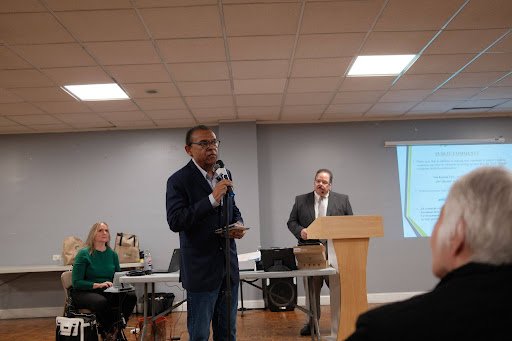
Dr. Nicky Sheats of the John S. Watson Institute for Urban Policy and Research at Kean University, at the Van Keuren Public Hearing, April 28, 2026.


Dr. Nicky Sheats of New Jersey Environmental Justice Alliance and Princeton University  warned in his comment that approving this permit would not only be bad for Jersey City, but it could also set a bad precedent for overburdened communities across New Jersey.


While this decision should be fairly straightforward for NJDEP, it will be a landmark one. It will either affirm the promise and intent of the nation’s first law requiring permit denials based on cumulative impacts, or it will signal that even a narrowly tailored exception can be stretched into a loophole that allows unjust siting to continue.


Links to:
Sustainable Jersey City: https://www.sustainablejc.org/

New Jersey Environmental Justice Alliance: https://njeja.org/

Tishman Center Cumulative Impacts Hub: https://www.tishmancenter.org/cumulativeimpacts

NJEJA Technical Primer on Large Scale Data Center Risks
What’s Happening?
 
From AI chatbots to Google Drive, data centers are the hidden infrastructure that powers everyday life on the internet. Their rapid expansion over the past few years is creating a new set of environmental‑justice problems in New Jersey; dozens of data‑center proposals are targeting water‑stressed, overburdened and grid‑constrained communities — often with very minimal public review or notice. This convergence of high power demand, massive water use, and limited community oversight is turning the Garden State into a testing ground for climate‑unfriendly, health‑hazarding technology.
 
  • Scale: As of 2024, there are roughly 1136 hyperscale facilities worldwide. A typical hyperscale facility dedicated to training AI models or hosting AI chatbots generally uses 300 megawatts (MW) or more of power, which is enough to power 100,000 homes.
  • Energy: U.S. data centers consumed over 4 % of national electricity in 2024, but over 40% of that comes from fossil fuels. This means more power for data centers, strain on the grid, and increased cost and pollution for residents. New data shows that the global fleet of hyperscale data centers has more than doubled in the past five years – rising to 1,136 facilities by the end of 2024 – and U.S. operators now account for roughly half of total worldwide capacity. The firm projects that total hyperscale capacity will double again within the next four years, driven largely by AI‑intensive workloads.
  • Water: While a “medium-sized” data center uses about 110 million gallons of water a year, a hyperscale center can use 3–7 million gallons per day. That’s about as much as a small town’s water supply over a year, such as West Orange or East Brunswick.
  • Air Pollution: Because of the size and scale of these facilities, many – if not all – need diesel backup generators, which can emit 200-600 times more nitrogen oxides (NOx) per kilowatt-hour (kWh) than modern gas plants. Often, these back-up generators run in times of peak demand or in emergency situations, which can create severe spikes of toxic air pollution and pollute the local air quality. 
  • Noise: HVAC and generator noise from hyperscale data centers can easily reach up to 96 dBA, which is well above the threshold for hearing damage for the average person. Long-term exposure can lead to ringing in the ears, change in hearing, and permanent hearing loss. 
  • Consumer Cost: As PJM and utility companies try to adjust pricing for the increased energy needs of these facilities, costs are passed onto ratepayers, i.e. every day residents. As a result, New Jersey households can expect to see energy bills rise by $20 per month or more along with rising water rates. 
  • Health & Equity: Residents living around data centers will be exposed to toxic air pollutants which can add billions in health costs nationwide. Low-income and environmental justice communities bear an increasing burden for health and safety costs per household.
  • Health & Safety: Storing large volumes of diesel on‑site creates multiple health and safety hazards. If tanks are not properly sealed, maintained, or equipped with necessary containment, leaks can contaminate soil and groundwater with acidic sediments, gums, and microbial by‑products that pose long‑term exposure risks to nearby residents.
  • Cooling Towers: Data centers generally rely on the use of cooling towers which use vast quantities of water to create mist. That mist can often migrate to nearby properties. If not properly maintained, it can cause public health issues like the growth of Legionella. Legionnaires disease, a type of pneumonia contracted by inhaling small droplets of water in the air containing Legionella bacteria, can often be contracted near cooling towers.

NJEJA Letter Regarding  Opposition to Vineland AI Data Center Project Development


January 2026


To: Council President Spinelli and Members of the Vineland City Council

CC: City of Vineland Planning Board 

Vineland City Council

640 East Wood St

Vineland, NJ 08362-1508


Re: Opposition to Project PBA‑24‑00022 (DataOne/Nebius/NEP Data Center)


Dear Council President Spinelli and Members of the council,

On behalf of the environmental justice communities that we serve and support, including the residents of Vineland, the New Jersey Environmental Justice Alliance respectfully submits this letter to urge the Planning Board and City of Vineland City Council to withdraw all approvals for Project PBA‑24‑00022 its current form such that a comprehensive, independent environmental review can be completed before any further action is taken. The project’s proposed 300‑megawatt hyperscale data center would impose severe, cumulative harms on an already overburdened area.  Furthermore, the Planning Board’s June 26, 2024, approval was granted with little over a week’s notice of the meeting and did not grant sufficient time for community members to review the proposal and provide input on the project. 

As such, we write this letter to bring to your attention several concerns we have regarding this project and to reiterate our support for the residents of Vineland who wish to seek this project halted so that a thorough analysis can be completed. This will give residents a holistic understanding of how the project will impact their community – perhaps both positively and negatively – and ensure that a more community-centric process is utilized in this project’s development.

Air Emissions and Local Public Health Risk

Project PBA‑24‑00022’s application indicates that the facility will rely on “behind‑the‑meter” power generation, with news reports indicating that natural‑gas and diesel backup generators will supply the majority of the 300 MW load. Operation of these fossil‑fuel generators would emit nitrogen oxides, carbon monoxide, volatile organic compounds, and fine particulate matter, creating a constant source of air pollution which leads to an exacerbated risk of asthma, cardiovascular disease, and other health conditions linked to poor air quality., , The American Lung Association’s State of the Air report assigns Cumberland County a D‑grade for particulate matter, indicating that local particulate matter concentrations already exceed standards. Vineland itself is classified as a “moderate‑risk” community for air quality, a contributing factor of that risk being power generation. Adding a 300‑MW data center has the potential to increase and worsen the negative health impacts that the Vineland community currently endures. The Vineland Environmental Commission’s technical comments specifically note that data centers are “quite noisy” and operate 24 hours a day. However, yet the Board’s meeting minutes do not reflect any discussion regarding emissions, noise thresholds, or required mitigation measures. 

Water Usage, Stormwater Risks, and Wetland Damage

Furthermore, water usage and stormwater management present additional, unaddressed risks. Project PBA‑24‑00022 describes a “hybrid air cooling system with a water component and a loop system” that allegedly has “no discharge into the municipal sanitary sewer,” while simultaneously stating that “water that is blown out goes into the sewer system.” No quantitative estimate of total water draw or blow‑down volume was provided. This could be potentially risky for the City of Vineland as it might impede Vineland’s ongoing water‑conservation measures and exacerbate previous groundwater contamination. The Environmental Commission comments stated that the applicant has not demonstrated a closed‑loop water system, that being, a closed system enabled to reuse both recycled wastewater and freshwater, allowing water supplies to be used multiple times. The applicant may rely on potable water instead for cooling “which is”, an unsustainable practice in a region already experiencing low water pressure. 

Moreover, the stormwater plan is presented only as more efficient and of better design, yet it is without any publicly shared calculations regarding peak runoff rates, time of concentration, surface storage, no predications on storm events, nor any hydrologic or hydraulic analysis. Additionally, the applicant has been granted numerous waivers by the planning Board to the city’s Stormwater Control Ordinance which allows reduced setbacks, elimination of required side slopes, and removal of access drives for bio‑retention basins. In doing so, these stormwater plan waivers undermine the protective intent of state stormwater standards and increase the likelihood that runoff containing pollutants from generators will reach nearby wetlands and groundwater, thereby presenting further risk and harm to the surrounding community.

In line with our concern for the surrounding community, enforcement records show that the parcel of land which Project PBA‑24‑00022 seeks to build on has been cited for unauthorized clearing and filling of approximately 1.08 acres of freshwater wetland, and an additional 3.97 acres of wetland transition area; these, violations cited under N.J.A.C. 7:7A‑2.2(a) and 7:7A‑3. Proceeding with a project that will further disturb these wetlands would compound ecological damage and expose the city to additional liability for non‑compliance with state wetland protection statutes.

Transmission and Electrical Load

The feasibility‑study agreement between the City of Vineland, Atlantic City Electric (ACE), and Northeast Precast/NEP Real Estate has not made clear, if the proposed data center will require substantial upgrades to local electric transmission capacity in order to support its 300 MW load. Although ACE has agreed to conduct a preliminary study, there has been no mention in this agreement to require an independent Energy Impact Statement. That being an analysis that quantifies a project’s electricity demand, the emissions from any on‑site generation, and the cumulative effects on regional grid reliability and local air quality for large‑scale energy intensive projects, such as utility transmission upgrades, industrial facilities, and data centers. Energy Impact Statements are crucial because they deliver an independent, data‑driven assessment of a project’s electricity demand, emissions, and grid effects, ensuring that any upgrades or on‑site generation meet standards before permits are granted. Without an Energy Impact Statement, communities cannot verify whether proposed developments will overload the local grid, worsen air quality or create undue noise.

Prior to any approval for permitting granted to Project PBA‑24‑00022, a comprehensive environmental review, should have been conducted which would have included air‑quality modeling, greenhouse‑gas accounting, and assessment of cumulative impacts on regional grid reliability. In order to best protect the community – both from a local air pollution and health perspective as well as a grid capacity and energy production standpoint – a comprehensive environmental review must be completed by an independent third party before any transmission upgrades or on‑site fossil‑fuel generation can proceed. The absence of such a study constitutes a procedural deficiency that leaves Vineland exposed to unvetted emissions, noise, and reliability risks associated with the data center’s energy supply strategy.

Taken together, the deficiencies in the permitting process, continuous high‑intensity noise, unquantified water consumption, unchecked emissions, inadequate stormwater controls, cited wetland violations, and the lack of an Energy Impact Statement, pose an unprecedented threat to public health, environmental quality, and climate‑justice commitments in Vineland. While this facility is not subject to the Environmental Justice Law at this time, the State of New Jersey has made clear its commitment to the principles of environmental justice and robust review, and therefore, the Board’s rapid approval without substantive scrutiny contravenes the state’s stated commitments to the principles of environmental justice and protection of overburdened communities, including engaging in meaningful community participation and cumulative impact analysis for projects that disproportionately affect environmental justice communities.

In light of these facts, we – in support of Sustain South Jersey, and local residents, respectfully request that the Vineland Planning Board/Council:

  1. Immediately suspend all permits and approvals for Project PBA‑24‑00022 pending a full, independent Environmental Impact Statement that addresses air quality, water use, stormwater management, noise, wetland impacts, grid strain, and electronic waste handling;

  2. Require Project PBA‑24‑00022 to submit a detailed engineering design demonstrating zero‑emission on‑site power generation – specifically solar photovoltaic with battery storage as we believe this to be most physically and financially feasible for all parties while yielding the greatest benefit -, continuous stack monitoring, and a binding emissions cap. 

  3. Obligate the developer to provide a closed‑loop water‑recycling cooling system design with verified maximum draw rates and documented blow‑down reduction strategies, confirming that no potable water will be consumed;

  4. Conduct a comprehensive noise impact analysis that includes continuous operational sound levels, night‑time thresholds, and mitigation measures such as acoustic enclosures or alternative equipment placement;

  5. Partner with Vineland residents to update the Vineland City Master Plan to create a definition of “AI data centers” and “hyperscale data centers” in the City Master Plan and embed enforceable zoning rules, including: a community‑driven safeguards of energy, water, noise and waste impacts, a specific land‑use designation (e.g., “Restricted Industrial – AI Data Center”) that confines siting to suitable infrastructure‑ready sites away from vulnerable neighborhoods, and collaboration with NJ Office of Planning Advocacy. 

  6. Provide full public disclosure of all technical documents, ensure translation services for non‑English speakers, and hold a new public hearing with at least thirty days’ notice prior to the hearing as well as 90 day public written comment period after the public hearing to allow affected residents to review, comment, and engage with experts on the Environmental Impact Statement and mitigation plans.

We stand ready to work collaboratively with the City of Vineland Planning Board, NJDEP, and other regulatory agencies to ensure that any development in Vineland meets the highest standards of environmental protection and social equity. Until these conditions are satisfied, we urge you to halt construction, rescind the approval, and reopen the process to genuine community participation.

We urge you to reflect on their decision and what kind of legacy they want to leave behind. As public servants, it is incumbent upon you to prioritize the community, their health, and the local environment in your decision-making processes.


Signed:


New Jersey Environmental Justice Alliance

45 Academy St, Newark, NJ 07102

(973) 306-4696

info@njeja.org


Brooke Helmick, Director of Policy 


Shamar White, Policy Fellow

NJEJA Joins Environmental and EJ Groups to Comment on the EPA’s Proposal to Repeal the Endangerment Finding

Last month, EPA Adminstrator Lee Zeldin and the Trump Administration have proposed a formal repeal of the EPA’s Endangerment Finding. As it currently works, the Endangerment Finding created a formal obligation for the EPA to limit greenhouse gas pollution under the Clean Air Act. This obligation a critical cool in protecting communities and combatting climate change.

In response, the Equitable and Just National Climate Platform, Climate Justice Alliance, Environmental Justice Leadership Forum, Moving Forward Network, and the Environmental Justice Health Alliance have collaborated to create comments opposing the repeal of the endangerment finding and a suite of other administrative actions rolling back community protections. 

For questions, please reach out to us at info@njeja.org

Read our full set of comments below:

Read NJEJA’s Comments on the NJ BPU Energy Resource Adequacy Technical Conference

As part of NJEJA’s aim to provide EJ guidance and technical expertise as well as educational materials to governmental agencies, bodies, and decision makers, we submitted comments regarding the New Jersey Board of Public Utility’s Resource Adequacy Technical conference. These comments were aimed at supporting the BPU in understanding the EJ perspective on different types of energy and call on the BPU to prioritize clean energy projects including more solar (both large scale and community-level), on- and offshore wind, battery storage, virtual power plants, and small-scale hydro-electric.

For questions, please reach out to us at info@njeja.org

Read our full set of comments below:

People’s Forum On Home Energy

SAVE THE DATE!

Join us in Newark, NJ for a collaborative discussion on energy efficiency in your homes and learn about the cost-savings of energy efficient appliances. Attendees will be entered in a raffle to win a brand new air conditioning unit!

NJEJA Signs On To EJNCF Letter on 2024 Permitting Reform

On July 30, the Equitable and Just National Climate Platform submitted a letter to Senators Joe Manchin and John Barasso regarding their 2024 permitting reform bill. The bill, if enacted, would risk EJ priorities under the IRA and risk increasing oil and gas lease sales, as well as drilling and mining projects. Instead, investments should prioritize clean, renewable transmission infrastructure.

For questions regarding NJEJA’s position and related policy concern, please contact Brooke Helmick, Director of Policy at brooke@njeja.org.

Read the full letter below.