NJEJA Comments on BPU Virtual Power Plant Energy Program Design
NJEJA Set of Comments on BPU Modernization
Policy In Action: NJEJA Supports Jersey City Residents in Fighting Cumulative Impacts
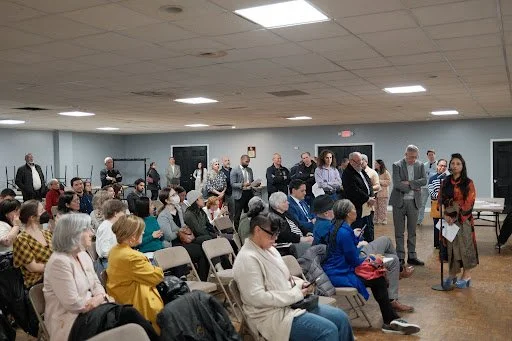
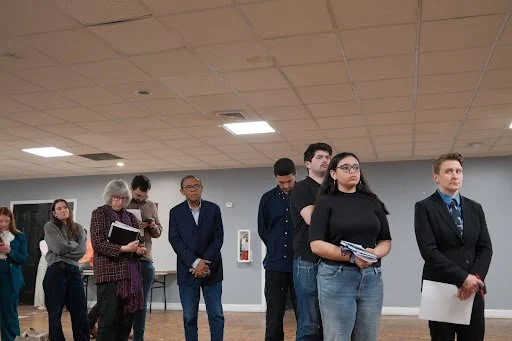
On Tuesday evening, April 28, the Tishman Center stood with Jersey City, NJ residents demanding the full enforcement of the state’s Environmental Justice Law. Some 100 people were gathered in person and 100 online at a hearing hosted by Van Keuren LLC to comment on its proposal to construct a new large-scale solid waste transfer station and material recovery facility. The facility would funnel regional waste to Jersey City, bringing diesel traffic and pollution directly to a community already suffering from environmental burden
Those in attendance included residents, representatives of neighborhood associations, local representatives from city and county levels, and all three state lawmakers representing Jersey City, as well as organizations like the New Jersey Environmental Justice Alliance, Earthjustice, Eastern Environmental Law Center, and Sustainable Jersey City. Numerous attendees, both in-person and via Zoom, spoke about the profound impacts of the proposed facility, sharing concerns about the associated noise, sight, smell, pollution, and truck traffic, and detailing what truly matters to this community and the surrounding area. Of the dozens of people who gave public comment that evening, not a single speaker expressed support for the project.
If permitted, the facility would process 750 tons of waste per day and generate over 260 round-trip truck trips per day, adding diesel emissions, noise, and traffic to a community already recognized as overburdened. The associated impacts of diesel emissions would include PM2.5 and NOx pollution, which is a precursor to ozone and an existing stressor for the community. Diesel emissions are also associated with numerous negative health impacts, including asthma and cardiovascular risk, and can worsen existing conditions, including heart and lung disease. The U.S. EPA reports that “these conditions can result in increased numbers of emergency room visits, hospital admissions, absences from work and school, and premature death.”
The facility argued that they would serve a compelling public interest by integrating themselves as part of the New Jersey Sports and Exposition Authority (NJSEA) Solid Waste Management Plan, as well as offering municipalities and entities in the surrounding counties (Bergen, Essex, and Hudson) an opportunity to divert their waste to the Van Keuren site. However, it should be noted that the “compelling public interest” provision of the EJ Law is specific to benefits felt by the OBC, which hosts the facility, and that there are already existing waste facilities in the surrounding area, which could take on excess waste Van Keuren claims they would support.
As Sustainable Jersey City Founder and Chair, Debra Italiano said,
“We do not need another waste transfer/materials recovery facility in Jersey City. That industrial zoned footprint of Van Keuren is a mega impediment to the planned Greenway Connectivity Corridors Vision. The Van Keuren Redevelopment Plan should be reversed, and the area should be rezoned with a new plan to integrate Jersey City green corridors connectivity plan and additionally provide for more affordable housing, which the city needs. Furthermore, there needs to be an intervention point which mandates that the NJSEA be more accountable to Jersey City and Hudson County, without superseding Zoning and Land Use Authority.”
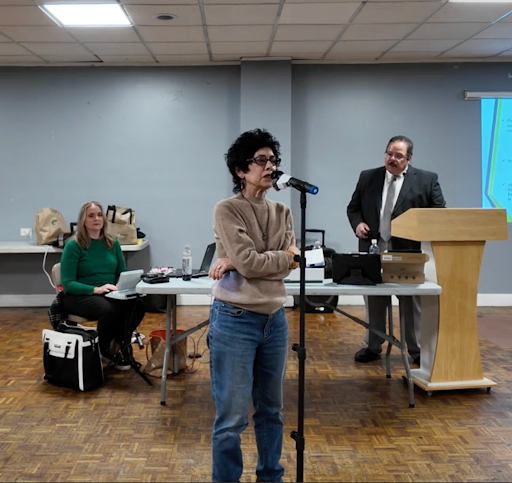
New Jersey Environmental Justice Alliance Director of Policy, Brooke Helmick, spoke on the audacity of the Van Keuren proposal and disputed the facility’s claim that they would fulfill an essential need in the area:
“Over and over again, representatives of the Van Keuren facility have stressed the minimal impact of pollution in the community. Not only is it egregious to presume that a community should be forced to accept even “minimal” pollution in their community, but 260 truck trips and the associated diesel emissions have immense negative health impacts on residents when compounded with the existing diesel pollution that the community already must contend with. Furthermore, Van Keuren has not demonstrated – with any sort of sincerity – that they provide service or fill a compelling need for the local overburdened community in Jersey City. The community has been clear: this permit proposal must be denied.”
New Jersey’s Environmental Justice Law is one of the strongest environmental and public health policies in the country. The law addresses the problem of cumulative impacts–the combined burden of multiple pollution sources, environmental stressors, and social stressors over time–in low-income communities and communities of color. The problem is a legacy of historic and ongoing environmental racism, and a consequence of regulations that typically analyze sources of pollution or specific pollutants one by one. Passed in 2020, NJ’s landmark law requires the New Jersey Department of Environmental Protection (NJDEP) to consider what burdens communities are already facing, and, more importantly, requires NJDEP to deny permits for new sources of pollution in already overburdened communities. Put simply, the law–and similar state policies it has inspired– is meant to stop adding harm to communities already facing too much.
Van Keuren’s request was the first for a new permit under the EJ Law – resulting in the first test of the law’s permit denial power.
As Patricia Cortado, Program and Communications Associate at the Tishman Center, and a resident of the Ironbound neighborhood in Newark, NJ, made clear in her comments to the crowd:
“On my block alone, we are already living with the consequences of environmental decisions made over decades… These are not data points. These are families I know and see every day.”
Neighborhoods like the Ironbound, home to three existing fossil fuel power plants, New Jersey’s largest garbage incinerator, and numerous polluting facilities, across the bridge from where the Van Keuren facility is being proposed, show what cumulative impacts look like in practice. One in 4 children has asthma. Other health issues related to ongoing pollution exposure include cardiovascular issues, diabetes, cancer, reproductive issues, and more.
As Cortado described, the impacts are physical but do not stop there:
“It is the anxiety of not knowing what exposure is doing to your body. It is the normalization of illness as part of everyday life. It is the loss of safety, dignity, the ability to feel well in our own neighborhood.”
In a presentation that lasted for nearly an hour before the public was given the opportunity to speak, the company’s representative openly acknowledged that the proposed facility would add burden to an already overburdened community and, under normal circumstances, would be denied. However, the company claimed the project qualified as a “compelling public interest” under the NJ law, a limited exception that would allow NJDEP to consider approving a permit for a new source of pollution despite its impacts.
Anna Yulsman, Research Analyst at the Tishman Center, along with many other commenters, contested Van Keuren’s claim:
“Under the EJ Law, the permit can be approved only if the applicant demonstrates that the facility primarily serves the essential [health or safety] needs of the overburdened community, that it is necessary, and that no reasonable alternatives exist. The applicant does not meet that standard.”
Yukyan Lam, Research Director and Senior Scientist at the Tishman Center, added:
“Here, Van Keuren points to a few reasons as to why they meet a compelling public interest, none of which are valid. It points to offering municipalities market choice in waste and recycling, helping the state meet recycling goals. It points to offering jobs, something like 14 staff positions, to the overburdened community, Jersey City, or “nearby areas.” It points to servicing waste from hypothetical housing to be constructed in 14 municipalities. None of these speaks to a compelling public interest in the form of an essential, environmental, health, or safety need. The alleged benefits are not even specific to the OBC. This is a proposed facility operating at a regional scale –servicing three counties (Essex, Hudson, and Bergen Counties); it does not primarily serve those living in this specific OBC. It would be dealing with regional waste in the backyards of the homes of the folks you heard from tonight.”
The stakes extend beyond this single decision.
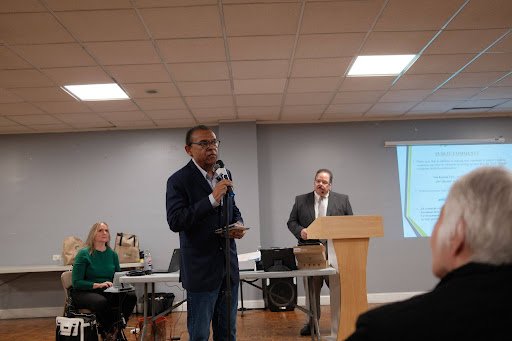
Dr. Nicky Sheats of New Jersey Environmental Justice Alliance and Princeton University warned in his comment that approving this permit would not only be bad for Jersey City, but it could also set a bad precedent for overburdened communities across New Jersey.
While this decision should be fairly straightforward for NJDEP, it will be a landmark one. It will either affirm the promise and intent of the nation’s first law requiring permit denials based on cumulative impacts, or it will signal that even a narrowly tailored exception can be stretched into a loophole that allows unjust siting to continue.
Links to:
Sustainable Jersey City: https://www.sustainablejc.org/
New Jersey Environmental Justice Alliance: https://njeja.org/
Tishman Center Cumulative Impacts Hub: https://www.tishmancenter.org/cumulativeimpacts
Plastics Impact on the Body – Infographic
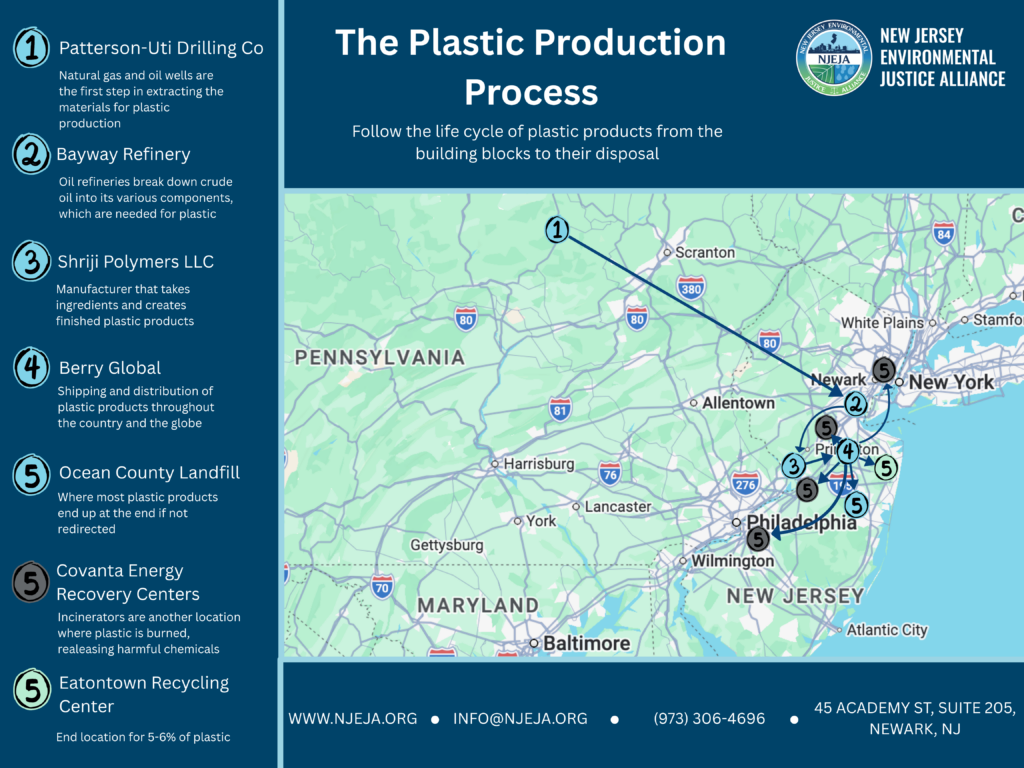
Lifecycle of Plastics – Infographic
NJEJA Technical Primer on Large Scale Data Center Risks
NJEJA Letter Regarding Opposition to Vineland AI Data Center Project Development
NJEJA Statement on Fourth Power Plant In Newark
March for Clean Air

Join us in attending the March for Clean Air, hosted by the Ironbound Community Corporation and co-sponsored by the New Jersey Environmental Justice Alliance. Attend the rally and march in our contingent as we oppose the Passaic Valley Sewerage Commission’s harmful plan to construct a fourth power plant in Newark and fight for our human right to breathe clean air, irrespective of race, income, or zipcode.
What: March for Clean Air
Where: Down Bottom Farms, 371-395 Ferry St, Newark, NJ 07105
When: Saturday April 20th,12-2pm
Registration Link: bit.ly/CleanAirNow
For transportation accommodations, please contact Chloe Desir at CDesir@ironboundcc.org.
For questions regarding NJEJA’s participation and event logistics, please contact Brooke Helmick at brooke@njeja.org